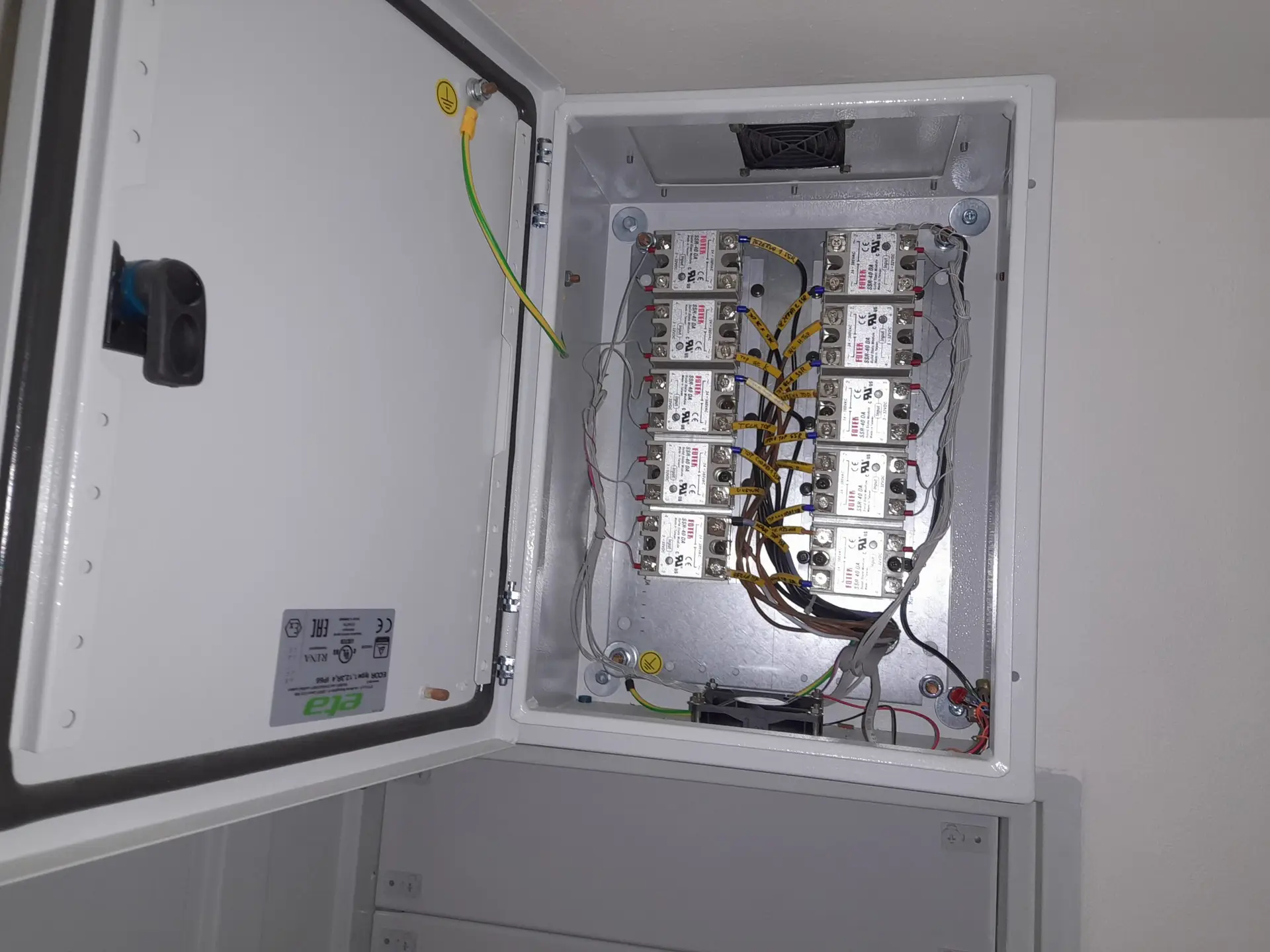
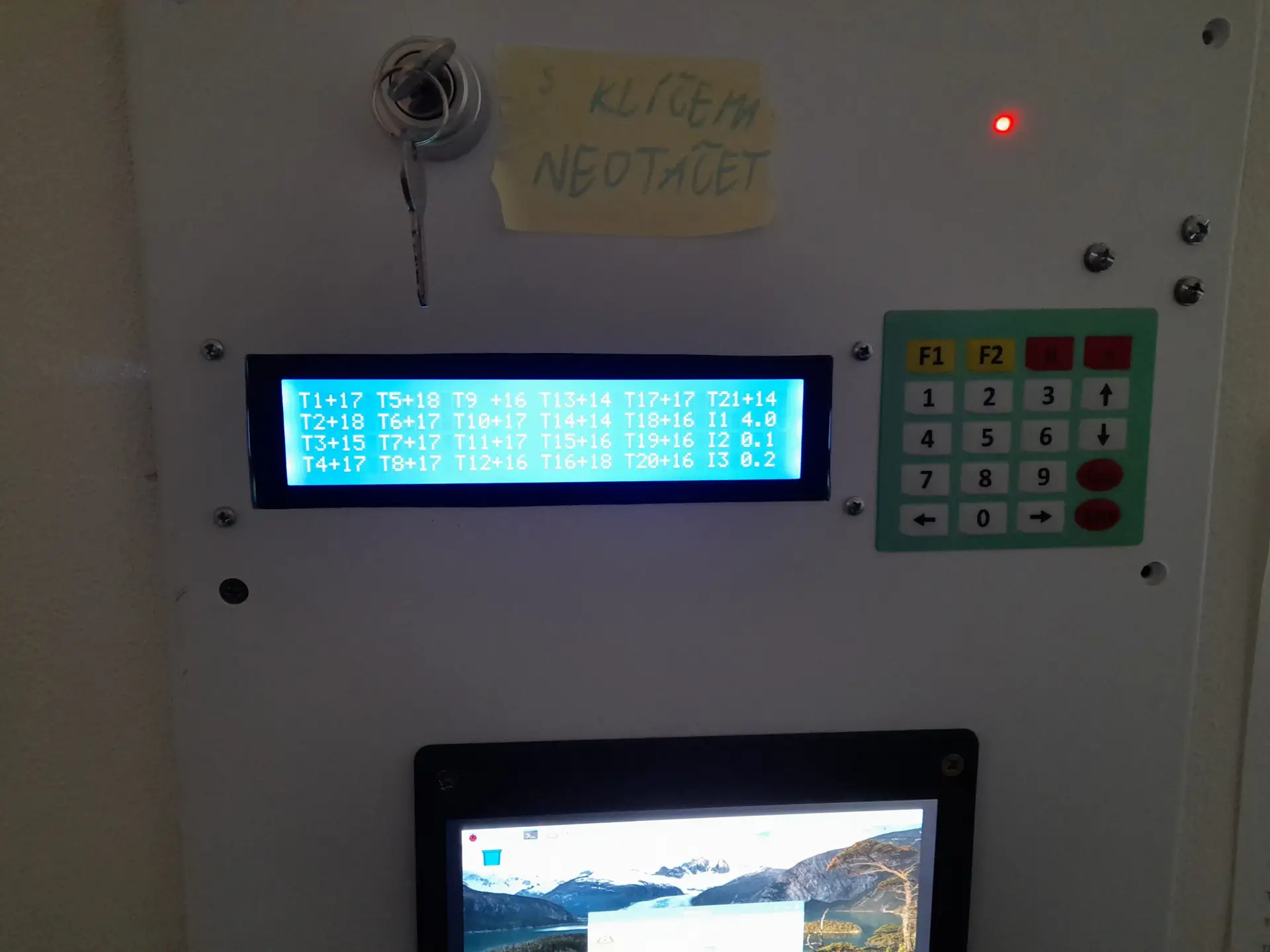
This project was very demanding for me, because I spent the longest time developing and fine-tuning it. The heating system in the scout clubhouse in Polná was designed during the planning of the clubhouse. It was necessary to determine in advance the types and powers of the heaters, the location of the sensors, the temperature, and to simplify the electrical installation as much as possible in order to avoid unnecessary problems in this project. The heating system in the clubhouse is the result of my collaboration with three other people. My role was to provide all the hardware and firmware for the device that provides temperature readings and controls all the heaters, fans, and indicators. This hardware is connected to the Raspberry Pi via a UART serial line.
Three independent applications written in Python are running on the raspberry pi. The first one takes care of communication over the serial line. It downloads all the measured values and writes them to the MQTT server and downloads all the information regarding the settings from the MQTT server. The second one downloads information from the google calendar, which contains information about the dates of use of each room, and uploads it to the MQTT server. The third one is a simple user interface that is displayed on the display. It shows the current temperatures in individual rooms on a graphical building plan. It is also possible to manually turn on or off individual rooms in the clubhouse independently of the calendar. Python scripts were created by Václav Kratochvíl and ChatGPT 😀
The hardware is divided into a measuring and control part. The measuring part contains an ATMEGA328 microcontroller, which measures and calculates values from twenty-four temperature sensors, three current sensors, two pulse inputs and two binary inputs and also controls heat recovery and obtains the CO2 level in the clubhouse. The measuring microcontroller sends the measured data via a serial connection to the main microcontroller. The main microcontroller is an ATMEGA1284. This processor operates individual thermostats for all devices that control all heaters, fans and indicators in all rooms of the clubhouse. It is also responsible for communicating with the Raspberry Pi. It also has a basic user interface programmed to control the entire system without a connected Raspberry Pi. The device is therefore much more complex than it seems.
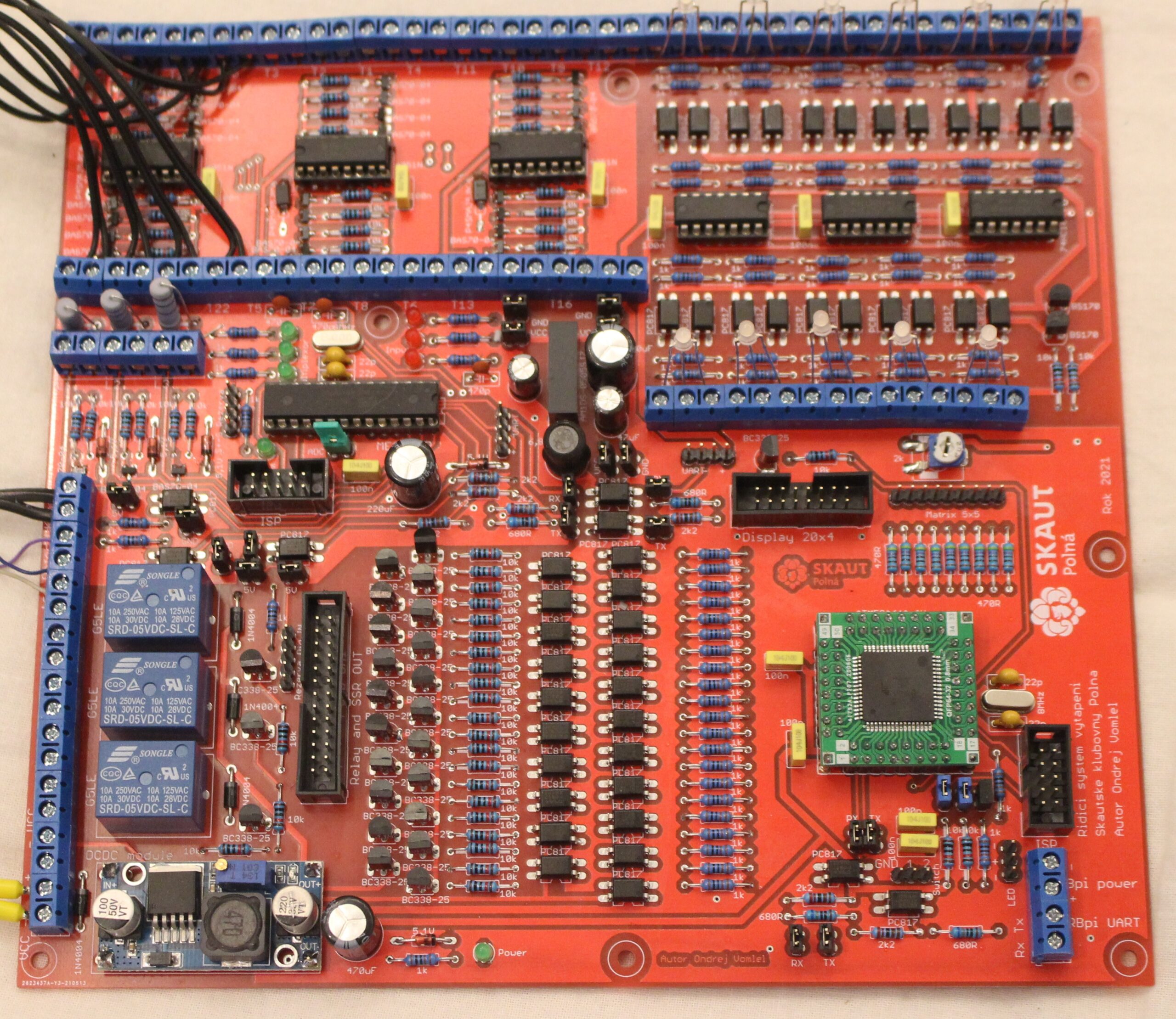
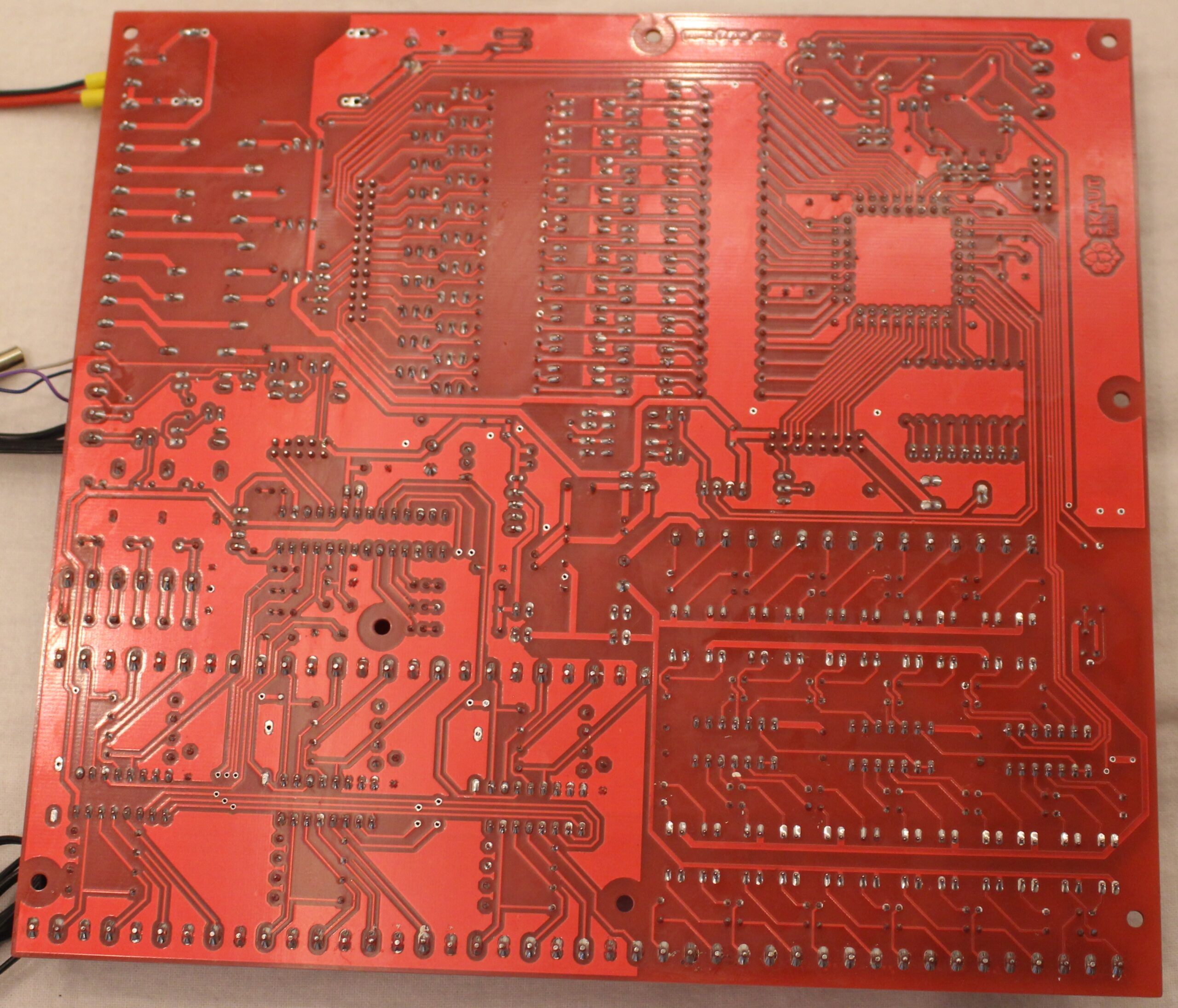
The PCB intentionally uses through-hole components to facilitate repairs and modifications that could not have been anticipated during the design phase. The production of a test prototype was not considered during development. All integrated circuits are connected to the PCB using sockets for easy replacement. This will facilitate any future repairs.
PCB top site
PCB botom site
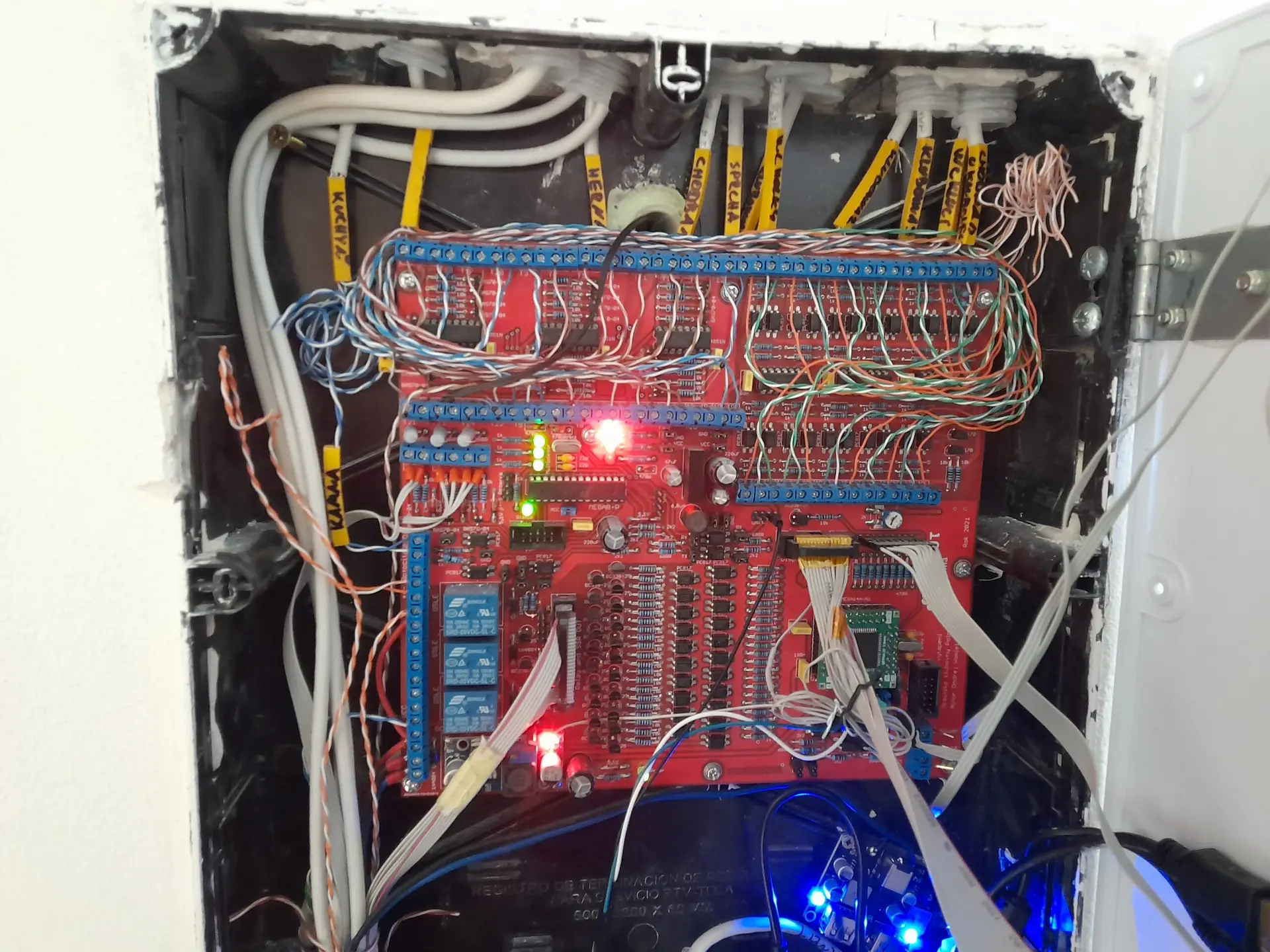
Finaly conected PCB
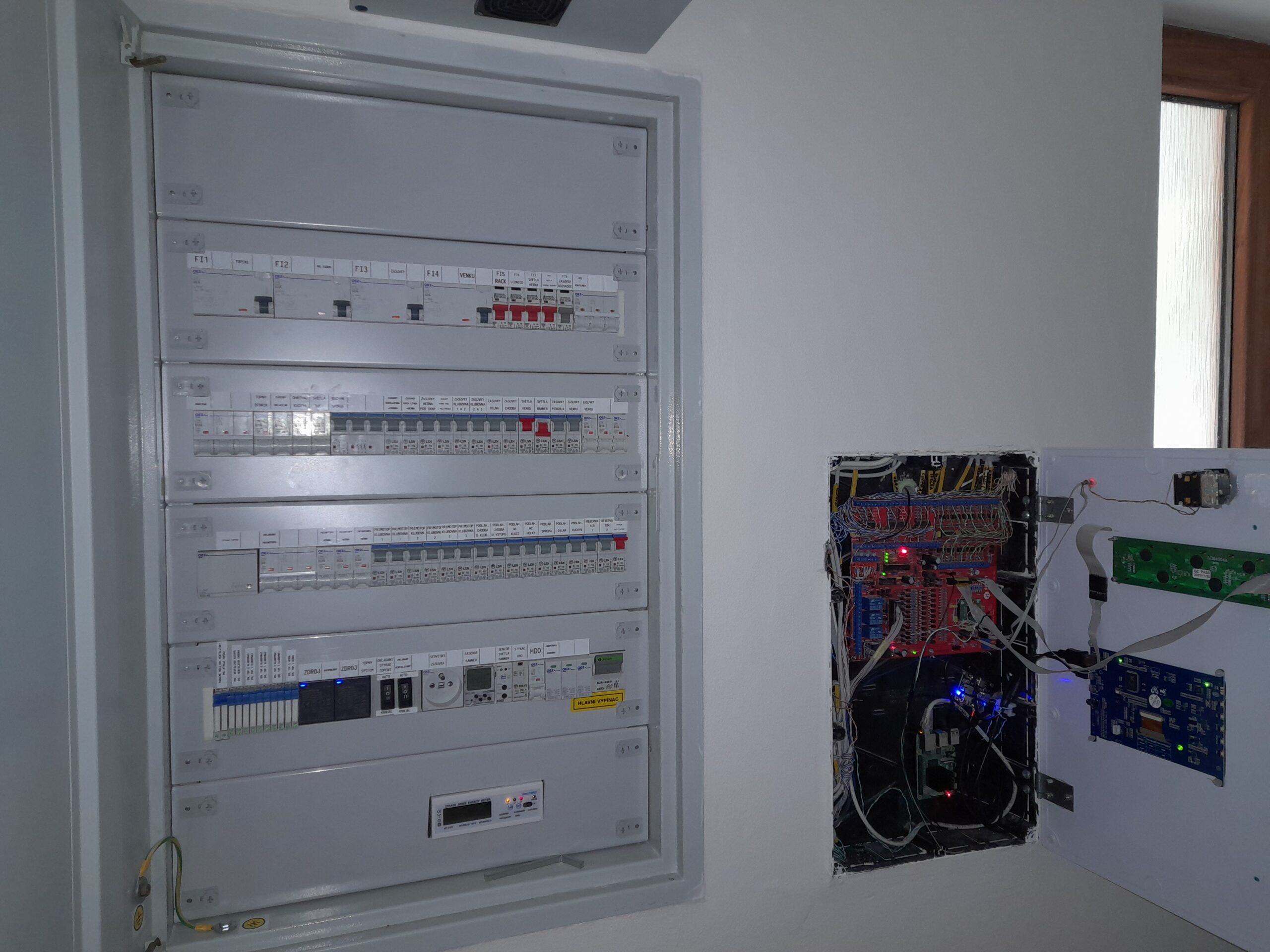
(Made by me) Cabinet with controls
Control of infrared heating panels and floor heating